
DatKhachSan.Com
April 13, 2026 • 6 min read
Cusco is not just a city; it’s a vibrant chapter in the history of the Inca civilization. From ancient walls to the artistic vibe of San Blas, Cusco captures the hearts of all travelers.
Arriving in Cusco: The Heart of the Inca Empire
Cusco is more than just a city; it’s a living testament to the Inca civilization. As the capital of the Inca Empire—one of the largest indigenous empires in the Americas—Cusco is undoubtedly the tourism hub of Peru today. Here, you can find Inca walls built into the highest pub in the world, while locals in ponchos walk their alpacas beside Starbucks. The scenery of the Andes is truly unmatched.
I’ve been here twice: the first time for two weeks in 2023 and again in 2026 for a month of exploration. Will I return again? Absolutely! Visiting Cusco is not just about seeing Machu Picchu; there is so much more waiting for brave explorers.
Getting to Cusco
The quickest way to reach Cusco is by flying. The city has numerous direct flights to major South American destinations like Bogotá and La Paz, but most travelers come from Lima. If you’re only staying for a short time and want to make the most of your visit to the heart of the Inca Empire, flying is your best bet. If you book in advance, tickets can be as low as $55. Just remember you’ll be landing at an altitude of 3,399 meters, so give yourself time to acclimatize.
Alternatively, you can also book a bus online through a local operator. The journey from Lima takes about 23 hours, from Arequipa 11 hours, from Huacachina (Ica) 18 hours, and from Puno 8 hours. Once in Cusco, getting around is easy with Uber. For nearby towns, you can take a collectivo (shared minibus) from Calle Pavitos.
Where to Stay in Cusco
Cusco is not just the gateway to Machu Picchu; it’s a captivating destination in its own right. You can find a range of accommodations from five-star hotels to simple hostels, depending on your budget. Cusco is a large city with about 500,000 residents, but most attractions are centered in the historic heart, making it very walkable.
One option is to stay right in the city center. Many hotels and hostels are just a few minutes' walk from Plaza de Armas, making it easy to find restaurants, cafes, and bars, and to step outside and encounter Inca heritage right at your doorstep. However, this area can sometimes be quite crowded and congested.
On my second return to Cusco, I chose to stay near Plaza de San Francisco and loved being close to the famous San Pedro market.
The Hilton Garden Inn Cusco offers modern comfort after a long day of exploration, while the Wyndham Costa del Sol Cusco is a converted 17th-century home turned hotel. Another interesting choice is the San Blas area, which is situated higher than the historic center and requires a bit of a climb. This area has a relaxed artistic atmosphere, complete with coca leaf readings, galleries, and cafes featuring trance music. From here, you can enjoy stunning views of the city and the surrounding Andes.
✈️ Tìm chuyến bay giá tốt
Đặt vé ngay với giá ưu đãi từ các hãng hàng không
Boltero Turistico Pass
Before diving into activities, I want to mention a special pass called the Boltero Turistico. This pass costs 130 soles and gives you access to 16 sites and museums in Cusco and the Sacred Valley for 10 days. Its value becomes apparent after visiting just two sites, as entry to each usually costs around 70 soles (~$21). Many of the sites I’ll mention in this article are included in the pass.
You can purchase this pass at the COSITUC office on Avenida del Sol or at the entrance of any site.
Main Attractions in Cusco
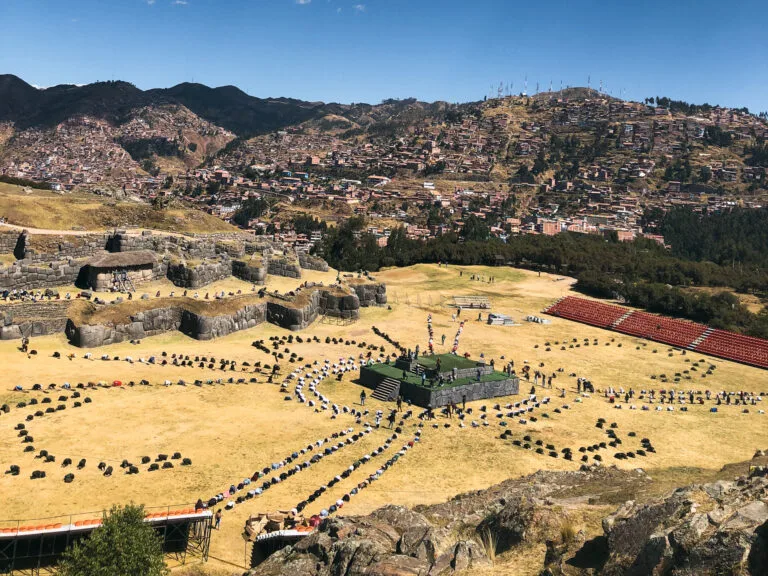
If you can only visit one site in Cusco, make it Sacsayhuaman. While Machu Picchu may be more famous, Sacsayhuaman was the most renowned structure during the Inca Empire’s golden age before Machu Picchu was discovered in 1911. Technically, Sacsayhuaman can be considered a greater engineering feat than that cloud city.
The massive stone blocks, weighing up to 120 tons, are fitted together without mortar, creating three-tiered walls. Everything was built without wheels or metal tools. At its peak, it featured a colossal architectural complex, a well with a complex hydraulic system, and a 15-meter-high tower. The first Spaniards to encounter this site described it with unending awe.
The purpose of Sacsayhuaman remains a topic of debate—many theories suggest it was a fortress, a temple, or a ceremonial site. What’s surprising is its sensitivity to the surrounding environment, reflecting the mountains behind and often integrating living rock into its structure. It symbolizes the intelligence of the Incas.
This site also witnessed the brutal battle between the Incas and the Spaniards for control of Cusco during the conquest. The bloody siege by Manco Inca was defeated when the conquistadors attacked Sacsayhuaman. Juan Pizarro, one of the Spanish leaders, was killed beneath these walls.
While you can sense the scale of the site for free from the walking paths, nothing compares to walking beneath those massive stones. I often think about strolling under the largest rock layer, with an initial sense of disbelief that such enormous stones could have been transported here. Along with the amazement at the creativity and planning required to build a massive wall with differently shaped stones fitting together seamlessly.
The Inca gates and stairways seem to transport you back to the empire’s golden age. From above, Cusco sprawls beneath the Andes in a breathtaking view. According to legend, the city is shaped like a puma, but you can create your own imagery from this vantage point.
Sacsayhuaman is not just a main structure—there are still remnants of stairways, mysterious water temples, and even smooth rock slides (a polished rock slope with an undetermined purpose, currently serving as a playground for local children and backpackers).
Sacsayhuaman is about a 20-minute walk from the city center and 10 minutes from San Blas. The ascent is quite steep, so you can really feel the altitude of 3,400 meters. Entry is included in the Boltero Turistico pass, or you can pay 70 soles ($20).
Explore More with a Free Walking Tour
A free walking tour will provide you with deeper insights into the city and the Inca culture here. I highly recommend joining one, as it not only helps you discover prominent tourist sites but also learn more about the history and daily lives of the locals.
DatKhachSan.Com
DatKhachSan.Com is a leading online flight booking platform in Vietnam, providing accurate and up-to-date travel information. We are committed to delivering wonderful travel experiences with the best prices on the market.